Showing posts with label dive rescue. Show all posts

Saturday, February 18, 2012

Oregon Public Broadcasting Ice Diving

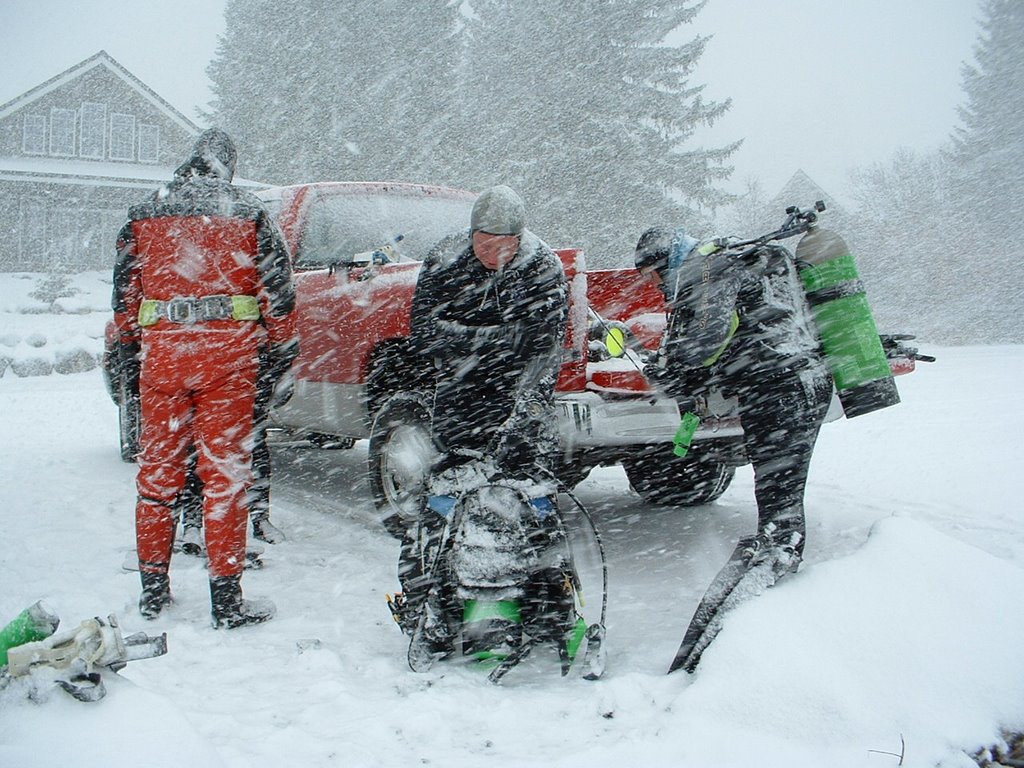
Oregon Public Broadcasting and Omni Divers Ice Diving - February 2012

OREGON - DIVING LOCATIONS: Lake of the Woods, Klamath Falls, OR
DATES: February 24 - 26, 2012
COST: Class - $295 - Text - $35 - Certification fees - $25
PREREQUISITE: Advanced Open Water Certification or evidence of deep, navigation, and night dives
More Specific Detailed Information on February Ice Diving 2012!

We have started the preparations for the ice dives. We will stay in motel rooms in Klamath Falls, Oregon. There is also rooms at Lake of the Woods Resort. Check their webpage http://www.lakeofthewoodsresort.com/.


We will do a presentation in Klamath Falls on Friday evening at 6 pm at the new Omni Divers location. In addition, Oregon Public Broadcasting crew will be onsite to collect topside and underwater video footage of our activities. Please stop by if you are in the neighborhood.

We will get organized earlier than Friday night in order to see what everybody is going to bring as their share of shovels, tents, tarps, ropes, ice harnesses, cross cut saw, gas for the snow blower, the snow blower, blower oil, carabiners, dry clothing bags, several extra pairs of gloves, waterproof boots, dry socks, etc.

We need to provide special safety measures overnight so no one will fall in the hole, i.e. flagging, poles, etc.

Ice Diving March 2011: We have now established a date and will start in earnest for the preparations for the March 2011's ice dives. We will soon make room reservations in McCall, Idaho.

We will do a presentation in McCall on Friday evening at 6 pm at the new McCall Fire Station, McCall Idaho.

We still will need to get organized earlier than Friday night in order to see what everybody is going to bring as their share of shovels, tents, tarps, ropes, ice harnesses, cross cut saw, gas for the snow blower, the snow blower, blower oil, carabiners, dry clothing bags, several extra pairs of gloves, waterproof boots, dry socks, etc. We will need to think of special safety measures overnight so no one falls in the hole, i.e. flagging, poles, etc.


About the only gear we don't have for ice diving is the tent, we can try to get the same tent we used last year from one of the ice divers or we can fabricate one from blue tarps and pvc pipe.
 

We have been getting interest statements and now we are getting deposits to verify how much really serious interest we have in ice diving in February in Klamath Falls in Oregon and in March 2011 in Idaho.


 Please email omnidive@omnidivers.com if you are interested or want additional information.

Monday, May 02, 2011

Diving Emergency Specialist ProgramTo Change with Course Revisions

The Diving Emergency Specialist (DES) recognition program is intended to encourage divers to seek continuing diving education. For years DAN statistics have shown that when divers are better educated, they are safer divers.

As DAN Education prepares to streamline courses, the requirements to be a DES diver and a DES Instructor will change as well.

To be a DES diver, one must meet the following qualifications:

• certification as a Rescue Diver and

• certification in DAN Diving Emergency Management Provider (DEMP) or DAN Diving First Aid for Professional Divers, or

• certification in the DAN Basic Life Support and First Aid (BLSFA) or Basic Life Support for Health Care Providers (BLSHCP) course and the three stand-alone DAN courses:

— DAN Oxygen First Aid for Scuba Diving Injuries

— DAN First Aid for Hazardous Marine Life Injuries

— DAN On-Site Neurological Assessment for Divers

To be a DES Instructor or Trainer, one must:

• be certified to teach the DAN BLSFA or the DAN BLSHCP courses and

• have taught at least eight providers in either the DAN DEMP or Professional Divers courses or

• be certified in all four stand-alone programs and have taught eight providers in each course.

Existing DAN DES Instructors and Instructor Trainers will be grandfathered in and will not have to requalify for the new standards.

These new standards will take effect in the summer of 2011 after the program revisions are available. However, both standards will be honored throughout 2011 as DAN Instructors make the transition.

Rest assured that the DES recognition program is not going away; it is a year-round program. Every year in the fall, DAN Education offers a promotion called the DES Quest to encourage more divers to seek education. Watch the summer issue of Oxygen Window for information about the 2011 promotion.

Please email omnidive@gmail.com if you are interested or want additional information.

Sunday, March 01, 2009

Surface Supplied Diver Training - Emergency Response Diving International (ERDI) Specialty Courses in Jacksonville, Illinois


Surface Supplied Diver Training - Emergency Response Diving International (ERDI) Specialty Courses in Jacksonville, Illinois.

Dates: March 21 - 29, 2009

Course Outline:

Course Overview
Course Objective
Course Prerequisites
Equipment Needed
Required Training Dives
Course Content
Tending
Air Diving
Operation of the Console
Minimum Course Hours
Organization
Class Room
Open Water Dives/Exercises/Scenarios
Dive Debriefing
TDI Log Books filled out and signed by the instructor


This course is five long days. We are starting in the morning on the first day. We will get the paperwork concluded, then we go through the materials and the hands-on session using the Superlite 27's, or AGA's if you have/use them, then to the confined water.

Then the next day we head to the "nice water" and each diver makes two separate dives, then tends and then uses the console. This is on a rotating basis. If you have non-divers we take them though everything except the confined water and in water activities. I do have them try on the helmets to get the idea of what their divers go through.

Then on the following day we go to the "yukky water" and each diver makes two separate dives, then tends and then operates the console.

Depending on equipment and numbers of students, we usually get done late afternoon on that day, in time to travel.

This course will continue all day with more dives at two different locations.

Costs are for the text, materials, certification fees, Jacksonville/Morgan County Dive Team. I do have group rates depending on the number of students.

The course is to be held in Jacksonville, IL, as that is where the equipment is located.

Please email omnidive@gmail.com if you are interested or want additional information on costs and specific times associated with this or any other possible training at our location or yours.

Sunday, February 01, 2009

ERD I (Emergency Response Diver I)


Clark County (Washington) Dive Rescue Team is hosting an Emergency Response Diving International (ERDI) ERD I course in Spring Creek, Oregon starting on February 8, 2009.

For more details email omnidive@omnidivers.com about course fees, dates, times, and equipment needs, etc.

The following is a brief outline of the course:

ERD I (Emergency Response Diver I)

This entry level emergency response diving course is designed to give the public safety diver the fundamental skills needed to safely function as part of a public safety dive team. This course is OSHA and NFPA compliant, as are all other ERDI courses.

Topics such as:

problem solving,
tender skills,
search patterns, and
evidence handling are covered just to name a few.

Dive skills include:

executing search patterns,
victim recovery, and
decontamination procedures among others.

ERD I also serves as a prerequisite to ERD I Ops Components courses.

ERD I Ops Components

ERD Drysuit Ops
ERD Ice Diving Ops
ERD Full Face Mask Ops
ERD Night Ops
ERD Small Boat Ops
ERD U/W Crime Investigation

The ERD Tender course is being held at the same time.

ERD Tender

This course is designed to introduce the public safety professional to the ERD Tender skills necessary to participate in public safety diving operations in a non-diving roll. Successful completion results in the ERD Tender certification.

The ERD Tender course can be taught in conjunction with the ERD I course. While the ERD Tender course is a non-diving course, the tender student should have a working knowledge of diving physics, physiology, techniques, and equipment.

Email us a mailto:omnidive@omnidivers.com for details, costs, prerequisites, etc.

Link at www.tdisdi.com/erdi/Courses.html

Another link at www.omnidivers.com/erdi.html

Monday, March 17, 2008

Emergency Response Diving International (ERDI) ERD I course in Grants Pass, Oregon

Josephine County (Oregon) Search and Rescue Team is hosting an Emergency Response Diving International (ERDI) ERD I course in Grants Pass, Oregon in the spring of 2008.

For more details email omnidive@omnidivers.com about course fees, dates, times, and equipment needs, etc.

The following is a brief outline of the course:

ERD I (Emergency Response Diver I)

This entry level emergency response diving course is designed to give the public safety diver the fundamental skills needed to safely function as part of a public safety dive team. This course is OSHA and NFPA compliant, as are all other ERDI courses.

Topics such as:

problem solving,
tender skills,
search patterns, and
evidence handling are covered just to name a few.

Dive skills include:

executing search patterns,
victim recovery, and
decontamination procedures among others.

ERD I also serves as a prerequisite to ERD I Ops Components courses.

ERD I Ops Components

ERD Drysuit Ops
ERD Ice Diving Ops
ERD Full Face Mask Ops
ERD Night Ops
ERD Small Boat Ops
ERD U/W Crime Investigation

The ERD Tender course is being held at the same time.

ERD Tender

This course is designed to introduce the public safety professional to the ERD Tender skills necessary to participate in public safety diving operations in a non-diving roll. Successful completion results in the ERD Tender certification.

The ERD Tender course can be taught in conjunction with the ERD I course. While the ERD Tender course is a non-diving course, the tender student should have a working knowledge of diving physics, physiology, techniques, and equipment.

Email us a omnidive@omnidivers.com for details, costs, prerequisites, etc.

Link at www.tdisdi.com/erdi/Courses.html

Another link at www.omnidivers.com/erdi.html

Saturday, February 16, 2008

Ice Diving March 2008 in McCall Idaho


Omni Divers - Ice Diving 2008

DIVING LOCATIONS:
March 2008

POTENTIAL DIVING LOCATIONS:
Cascade Lake, Cascade, ID
Payette Lake, McCall, ID

DATES:
March 21 - 23


PREREQUISITE:
Advanced Open Water Certification
or evidence of deep, navigation, and night dives

COST:
Class - $295
Text - $35
Certification fees - $25

Ice Diving Information for 2008

More Specific Detailed Information on March Ice Diving 2008

Ice Diving March 2008: We have now established a date and will start in earnest for the preparations for the March 2008's ice dives. We will soon make room reservations McCall, Idaho for March 2008.

We will do a presentation in McCall on Friday evening at 6 pm at the new McCall Fire Station, McCall Idaho.

We still will need to get organized earlier than Friday night in order to see what everybody is going to bring as their share of shovels, tents, tarps, ropes, ice harnesses, cross cut saw, gas for the snow blower, the snow blower, blower oil, carabiners, dry clothing bags, several extra pairs of gloves, waterproof boots, dry socks, etc.

We will need to think of special safety measures overnight so no one falls in the hole, i.e. flagging, poles, etc.

About the only gear we don't have for ice diving is the tent, we can try to get the same tent we used last year from one of the ice divers or we can fabricate one from blue tarps and pvc pipe.

We have been getting interest statements and now we are getting deposits to verify how much really serious interest we have in ice diving in March 2008 in Idaho.

Please email omnidive@omnidivers.com if you are interested or want additional information.

Monday, October 08, 2007

SAR Conference - September 11 - 13, 2008 - Portland Oregon

Rob W wrote:

Hey folks-

I am working on the "water" portion of a SAR conference in Oregon for 2008. I need to ask you fine folks for some help with 2 things. Did anyone attend the Hybrid car presentation at IADRS, and what is your feedback?

Secondly, I want to get an MD or like to come talk about general dive fitness, and medical complications with divers up to and including DCS, recognition and prehospital care. DAN has not returned my emails...yet. I contacted Virgina Mason hospital in Washington but one there can commit. The local doc's at the Portland chamber aren't interested. Anyone have any leads/contacts?

Thanks,
Rob

We are planning a 3 SAR day conference Sep 11-13 in Portland. I have been tasked with the "water" portion. I hope you can make it. It will have several "tracks" so at any given hour you have a few options to choose from.

It has been a challenge to create this track and keep the appeal for all that work around water. I want to appeal to SAR coordinators, divers, SRTS, EMT's, and boat handlers.

Here is a tentative line up for the water track. I have the ME doing his thing you saw at the dive conference, a guy coming to talk about hybrid cars in water, a guy on diver health (DCS etc), a white water expert with case reviews (risk/benefit) , Redman trainer coming in to do full day of in water exercises dealing with panic/hostile victims in water, waterborne ICS management class, and managing risk in waterborne training (Damen Rusk)

What are your thought/ input? I hope the Marine Board steps up and sends some folks.
Rob

doug strain wr

Hey Rob, get a hold of Klamath County. There dive captain is a DAN trainer and works in the medical field.

Doug Strain

Monday, September 17, 2007

Open and Advanced Water and Rescue Class - September 13 - 16, 2007


McCall Fire/Dive Rescue


is hosting the following courses at their facility in McCall, Idaho.

Open Water Class starting September 13 and ending September 16, 2007

Advanced Open Water Class starting September 15 and ending September 16, 2007.

Rescue Class starting September 16 and ending September 17, 2007.

You are invited to join team members in the classes.

Please email omnidive@omnidivers.com if you are interested or want additional information on costs and specific times associated with the listed dates.

Wednesday, July 04, 2007

Why Do Department Dive Teams Need Public Safety Training?


General Information about ERDI Training

A Typical Scenario:

It is 4 am when the dispatcher turns in the call for a car overturned in the river. Two local firemen who are also divers jump in a pick up truck loaded with the dive gear from yesterday's recreational diving and drive to the scene. Upon arriving they immediately suit up and jump into the river to effect rescue. As soon as they step into the water they notice that the current is much faster than they expected and that the water is much colder.

The first diver uses the current and drifts to the car and grabs on, the second diver follows. The first diver crawls inside the open passenger door to search for the victim. As the second diver reaches the car his recreational gear becomes entangled. His weight causes the car to shift and roll in the current. He travels down stream in the current and catches an overhanging tree branch. The first diver is effectively trapped in the car only three feet from the surface. When public safety officials arrive they immediately commence a surface rescue procedure to retrieve the second would be rescuer from the tree branch. They also called for a dive team from a neighboring county to rescue the diver in the car.

Unfortunately by the time the dive team arrives their rescue is a body recovery. The driver of the car comes back to the scene with the Highway Patrol Officer just as they pull the body of the first diver from the water. The driver had escaped from the vehicle and walked to a neighboring house to call the Highway Patrol.

The efforts of these well intentioned but under trained divers resulted in a needless fatality and putting numerous other professionals at needless risk. The scene portrayed here is fiction, but, scenes like it happen every year. The reason is not really a lack of training, that is a symptom. The real reason is the failure of administrators to realize the need for specialized training and equipment in the field of Public Safety Diving.

Before starting a dive team, each department must weigh the cost of accomplishing the task properly versus the benefit for the community. What will your community gain? Are other resources available to accomplish the same goals. If you decide a dive team is necessary then please decide to adequately equip and train that team. This information will give you the questions you should ask about the training you will receive.

Do you need Public Safety Training?

Diving is a specialized activity taking place in a hazardous environment. That is why even recreational divers require certification to access equipment, air fills and dive sites. That recreational certification (called open water) qualifies divers to dive in reasonably calm, clear conditions at depths not to exceed 60 feet. In the recreational diving industry that certification is frequently referred to as a permit to learn, just as a learner's permit is issued to a person completing high school drivers education. We do not allow the learning permitee to drive without supervision, much less operate an emergency vehicle in route to an accident or fire scene. Yet many departments feel that open water training qualifies the diver to dive in the hazardous environments encountered by the Public Safety Dive Team.

Many teams have fallen victim to the Rescue Diver Certification farce. Recognizing the need for additional training the administrator seeks out "professional assistance" from the local dive store. The dive store instructor provides all that he is able to provide, a recreational certification as a Rescue Diver. Most recreational training agencies define their Rescue Diver Course as a self and buddy rescue program. This is adequate for helping your buddy who gets in trouble at 45 feet on the coral reef in the Keys, but not much assistance in the Public Safety Environment.

The diving environment qualifies in every area as a HAZMAT site. Add fuels and oils from a submerged vehicle and we have put multiple hazardous chemicals around the diver. Additionally, those chemicals will destroy the divers life support system if they are inadequate for the job. Place the diver inside the vehicle to do a recovery and we have added confined space rescue in a HAZMAT environment to the picture.

How many department administrators would take a person off the street with no formal training and place them in that situation above water?

Applied to other areas, imagine taking a person off the sidewalk handing them bunker gear and sending them into a burning building or sending a person to do hostage negotiation with only the information found in over the counter magazines. Yet, almost daily departments do just that with department dive team members or even bystanders that happen to dive. Is this an invitation to disaster? Should you ask the members of your department to accept or even volunteer to be a part of this potential disaster?

So how do you select and understand the type of training you are getting?

When contracting the initial training for your dive team you will probably be limited to two sources - sport certification instructors and agencies that specialize in training public safety divers. The other limited but possible resource is technical agency instructors with specialized experience in rescue operations. The advantage to sport instruction is cost and availability. The drawback is an instructional program which generally prohibits the training of professional diving activities or any diving activity outside the traditional recreational limits. The training focuses on avoiding the situations the public safety diver will encounter on 90% of all calls. Additionally the instructor probably lacks any public safety experience.

From a liability perspective, this may place the department in an indefensible position if training is questioned. From a safety perspective we have created an accident waiting for a scene. These factors are addressed by hiring public safety diving instructional specialist with verifiable credentials and experience. The drawback is availability, since local resources frequently don't exist. That lack of availability will probably increase cost. The department must decide if the increased safety and reduced liability are worth a few extra dollars. That is part of the team's obligation.

How do you qualify the instructor?

The first question to ask is what are the instructor’s qualifications?

What technical, rescue or public safety diving certification courses can the instructor teach?

Are those courses certified through a recreational training agency?

If so, does the agency also endorse the training of professional public safety divers?

Is the training NFPA and OSHA compliant (not compliant with some perceived provisional exemption!)?

Next, contact the certifying agency of the instructor. Ascertain:

1) Does the agency endorse the training of professional or commercial divers for Public Safety Operations;

2) Does the instructor’s insurance cover him for teaching these types of activities;

3) If the agency finds that their training is questioned in court does the certifying agency have any training standard or provision which would indicate the Public Safety Diver was diving beyond the realm of his certification and training; and

4) You may also want to verify the certification level and reputation of the specific instructor with whom you are dealing.

Please email omnidive@omnidivers.com if you are interested or want additional information.

ERDI Course Options

ERDI Diver Level Courses

ERD I
ERD II

ERDI Non-Diver Level Course
ERD Tender

ERDI (Operations) OPS Component Courses

ERD Drysuit OPS
ERD Full Face Mask OPS
ERD Ice Diving OPS
ERD Confined Space OPS
ERD Night OPS
ERD Small Boat OPS
ERD Surface Supplied OPS

ERDI Leadership Course

ERD Supervisor

ERDI Professional Courses

ERD Instructor
ERD OPS Components Instructor
ERD Instructor Trainer

Sunday, January 14, 2007

PSDiver Monthly Issue 34

FOR IMMEDIATE RELEASE
PSDiver Monthly Issue 34


PSDiver Monthly Issue 34 Is Now Available - ALWAYS FREE
January 8, 2006

GREETINGS!
Issue 34 of PSDiver Monthly is now available for download

IN THIS ISSUE - PSDiver Monthly Issue 34
UNDERWATER DIGITAL CAMERA SYSTEM FOR PSDM SUBSCRIBERS! A FEW STILL AVAILABLE!
National Search and Rescue Conference Announcement
PSD News and Articles
MISSION REPORTS - Swift Water Dive Recovery
Coach - "Thanks for the Mammories"
Continuing Education and MORE!

The Public Safety Diving Association has now recognized the PSDM CE Program as eligible for inclusion in their annual renewal CE requirements!. Contact your PSDA Instructor or PSDA for details.

MISSION REPORTS: We are still working on building the Mission Reports feature and need your stories. We are not asking for essays - just a page or so relating a memorable dive call you might have made.

If you LIKE what we do - help us spread the word and FORWARD this to other team members, and departments!

Forward this - Help Us Spread The News!


Our Sponsors Include:
SeaBotix
Rescue ONE Connector Boats
VideoRay
SubSalve
Dive Lights International
Harri's Acoustic Products
Emer gency First Response
Submerssible Systems
Scuba4Less Online
Ocean Management Systems
DUI - Diving Unlimited International
Swat Headsets
IADRS
JW FISHERS
Trelleborg Viking
Techical Rescue Magazine
Ocean Technology Systems
Marine Sonic Technology, Ltd
UTC SPORTS - Rapid Deployment Emergency System

About PSDiver Monthly
PSDiver Monthly was created as a way to help improve awareness, education and safety for Public Safety Dive Teams and Water Rescue and Recovery Teams. PSDiver Monthly subscriptions are FREE.

PSDiver Monthly is an Internet E-zine specifically designed for Public Safety Divers and Water Rescue Technicians. News articles and information from around the world as well as independent articles, special features, safety notices and continuing education will be shared in each issue.

Corporations who believe in the work that Public Safety Divers and Water Rescue and Recover Teams perform and who wish to show their support sponsor this e-zine. This is and will be the place to get the most current news affecting the Public Safety Diving and Water Rescue community as well as the most current equipment and ocassionally, special pricing from our sponsors.

Fire Department Dive Teams, EMS Dive Teams, Police Divers, SAR divers and Flood and Swift Water rescue teams should all benefit from this publication.

PSDiver Monthly Website: http://www.PSDiverMonthly.com

FREE Internet Discussion Group for Public Safety Divers and Water Rescue and Recovery Teams

We also offer a free RELATED Discussion Group for Public Safety Divers and Water Rescue and Recovery Teams.

Founded on Dec 9, 2000, this MODERATED discussion group has over 1,200 members worldwide, and provides an incredible FREE resource for your team and team members! Being MODERATED, there is NO SPAM generated by joining!

DISCUSSION GROUP http://groups.yahoo.com/group/PSDivers-PublicSafetyDiversForum/

STAY SAFE!
Mark Phillips
Editor / Publisher
email: psdivermonthly@aol.com

This email was sent to omnidive@omnidivers.com by psdivermonthly@aol.com

PSDiver Monthly 841 South Main Street Lumberton TX 77657

You are receiving this email from PSDiver because you are affilliated with a Public Safety Agency, Fire. Police, EMS - Or you have previously subscribed. To ensure that you continue to receive emails from us, add
psdivermonthly@aol.com and
Mark@psdivermonthly.com to your address book today.


Please email omnidive@omnidivers.com if you are interested or want additional information associated with this post.

Thursday, August 31, 2006

Open Water, Advanced Open Water, and Rescue Training - McCall Idaho Fire/Dive Rescue


McCall Fire/Dive Rescue


is hosting the following courses at their facility in McCall, Idaho.

Open Water Class starting September 28 and ending October 1, 2006.

Advanced Open Water Class starting September 30 and ending October 1, 2006.

Rescue Class starting September 29 and ending October 1, 2006.

You are invited to join team members in the classes.

Please email omnidive@omnidivers.com if you are interested or want additional information on costs and specific times associated with the listed dates.

Sunday, July 09, 2006

Public Safety Diving - Training Weekend - September 2006

Klamath County Sheriff Dive Rescue Team
Hosting a PSD Training Opportunity
Come Join Us

Klamath County Sheriff Dive Rescue Team is hosting a Public Safety Diving (PSD) Weekend, September 8, 9 and 10, 2006, at Whiskeytown Reservoir, near Redding California.

Public Safety Diving Instructors from Washington and Oregon plan on attending to assist the Klamath County Sheriff Dive Rescue Instructors.

Emergency Response Diving International (ERDI) and Public Safety Diving Association (PSDA) public safety diving instructors will be on hand to conduct classes, specialties, discussions, in-water work, and control of the overall training aspects.

Link at www.omnidivers.com/klamathcountysheriffsdiverescueteam.html

Thursday, April 20, 2006

Public Safety Diving - Training Weekend - September 2006

Klamath County Sheriff Dive Rescue Team
Hosting a PSD Training Opportunity
Come Join Us

Klamath County Sheriff Dive Rescue Team is hosting a Public Safety Diving (PSD) Weekend, September 8, 9 and 10, 2006, at Lake of the Woods, Klamath County, Oregon.

Public Safety Diving Instructors from Washington and Oregon plan on attending to assist the Klamath County Sheriff Dive Rescue Instructors.

Emergency Response Diving International (ERDI) and Public Safety Diving Association (PSDA) public safety diving instructors will be on hand to conduct classes, specialties, discussions, in-water work, and control of the overall training aspects.

Link at www.omnidivers.com/klamathcountysheriffsdiverescueteam.html